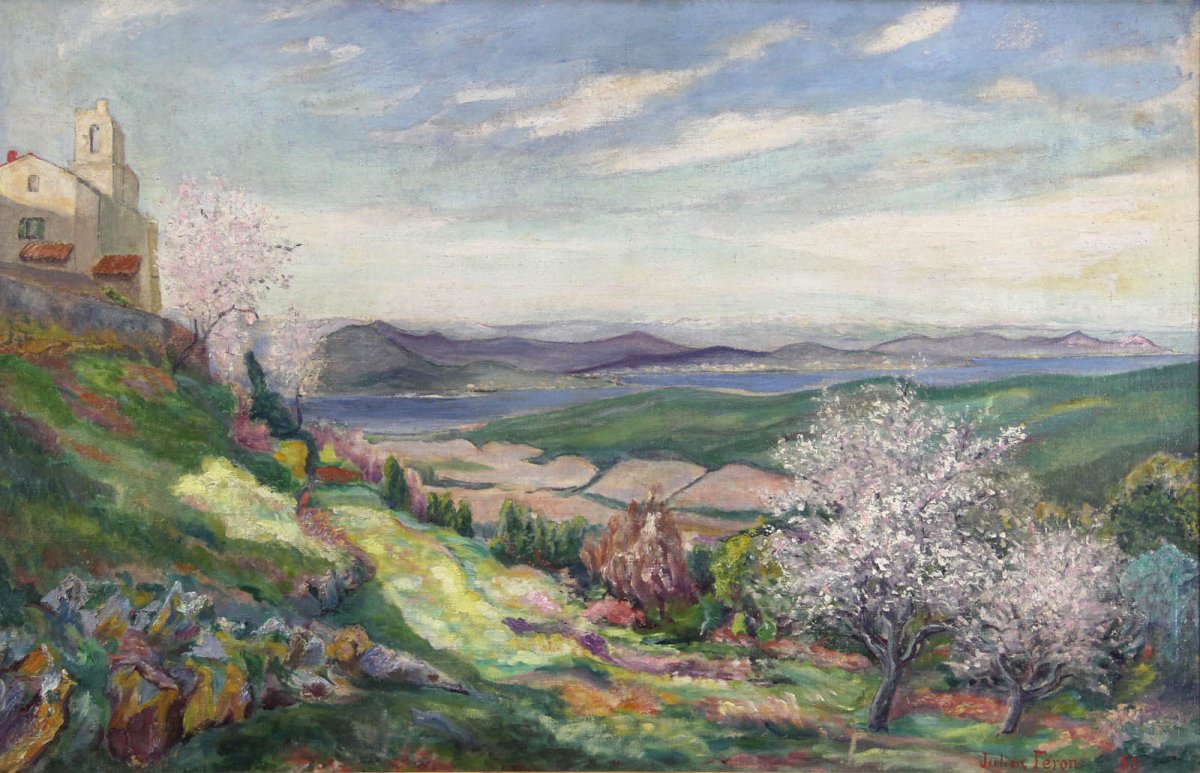
The painter of apple blossoms
Julien Féron was born on September 14, 1864 in the Normandy village of Saint-Jean-du-Cardonnay, into a well-to-do family. He distinguished himself in his youth by winning prizes in drawing. Following his parents’ wishes, he studied engineering before his father bought him a business in the small commune of Le Houlme. He became an important alcohol merchant in the Cailly valley, but business was of little interest to him; he entrusted the management of the company to his wife, an Alsatian who had fled to France after the defeat of 1870.
He attended painting exhibitions in Rouen and Paris and began painting in 1898, as a self-taught artist. His fortune enabled him to create a vast studio on his estate. Through the actor and art collector Dorival, who took an interest in his paintings, he met Armand Guillaumin in 1904. The two painters became friends. Guillaumin came to work in Féron’s studio in Le Houlme, while Féron made three visits to Guillaumin’s studio in Limousin. After 1910, they did not see each other again, but kept in touch by letter.
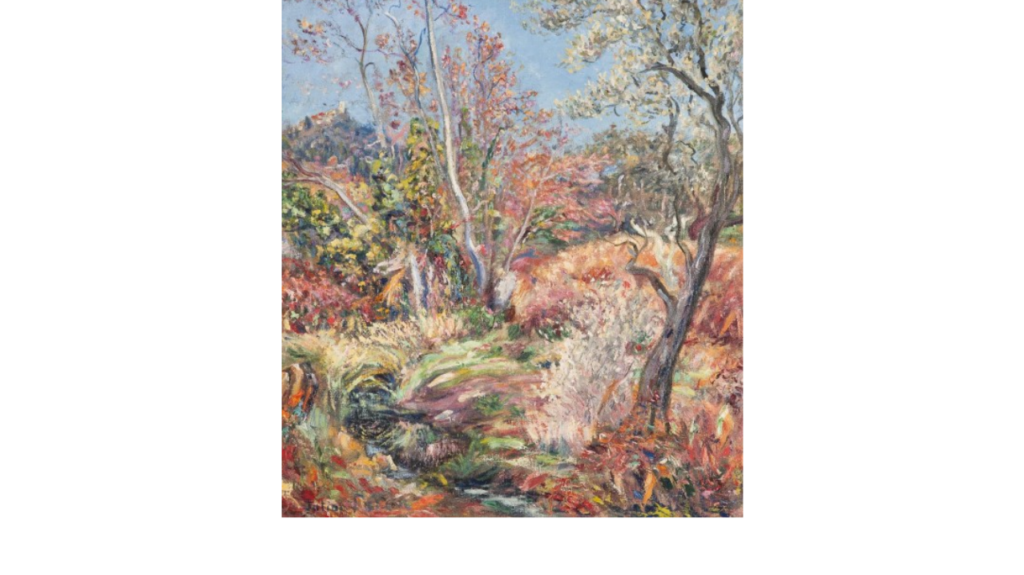
Previously known as “the painter of apple trees in blossom”, Julien Féron is renewing himself by painting the landscapes of Crozant in the Creuse.
His reputation spread, and in 1907, along with other Norman painters such as Robert Antoine Pinchon, Pierre Dumont, Eugène Tirvert, Marcel Couchaux and Pierre Hodé, he founded the XXX group, then the Société de peinture moderne. His house in Le Houlme became a meeting place for painters.
The father of six children, this prominent figure was involved in the life of his commune of Le Houlme, where he was mayor from 1912 to 1924. He built and financed workers’ housing. He also chaired the Avenir du Houlme gymnastics club.
Julien Féron travels to Tunisia and Algeria, but this has no influence on his work. He settled in Paris, which he left after the tragic death of his son by suicide.
Another life in Gassin
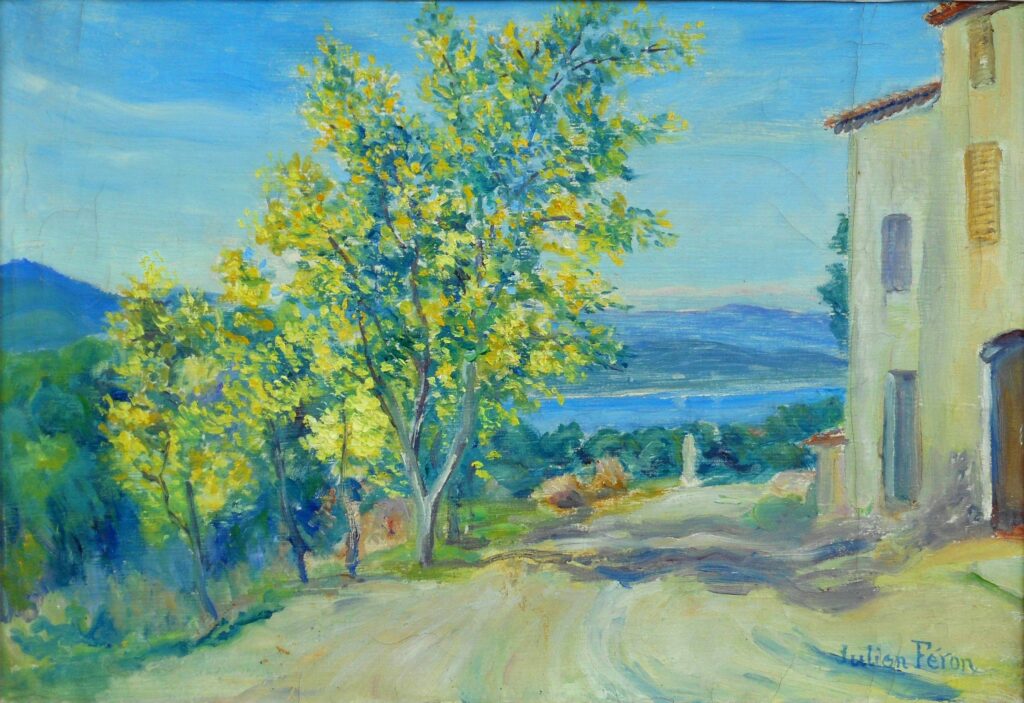
He travels to the south of France after this terrible tragedy, at the invitation of Emmanuel Bénézit, in Hyères. He explored the hinterland, discovering the perched village of Gassin, its landscapes and almond trees.
He fell under its spell and soon afterwards bought a village house there, returning for two months at a time for eight years. In 1934, his health declined and he was no longer able to travel. He continued to travel to Paris until his last days, to see exhibitions and visit the collections of the Louvre Museum.
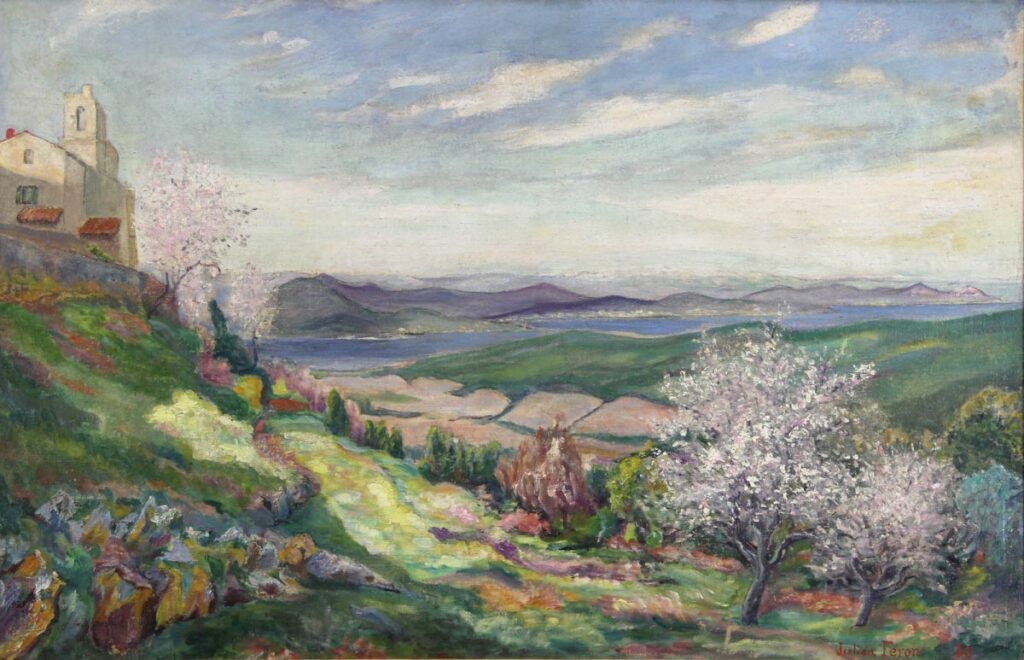
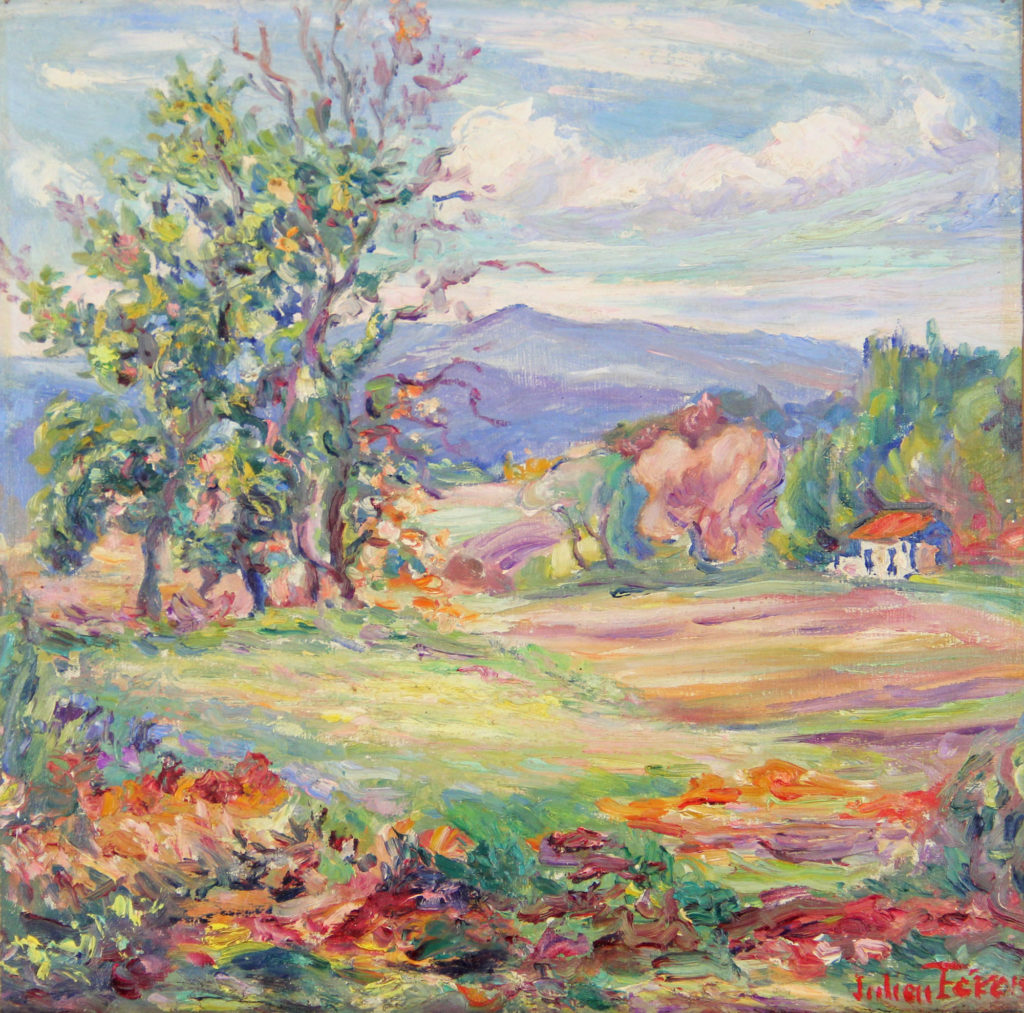
Tempted by Impressionism, then inspired by Fauvism, his painting was influenced by his meeting with Guillaumin for many years. He broke away from this in the 1910s, and his paintings are characterized by their beautiful colors.
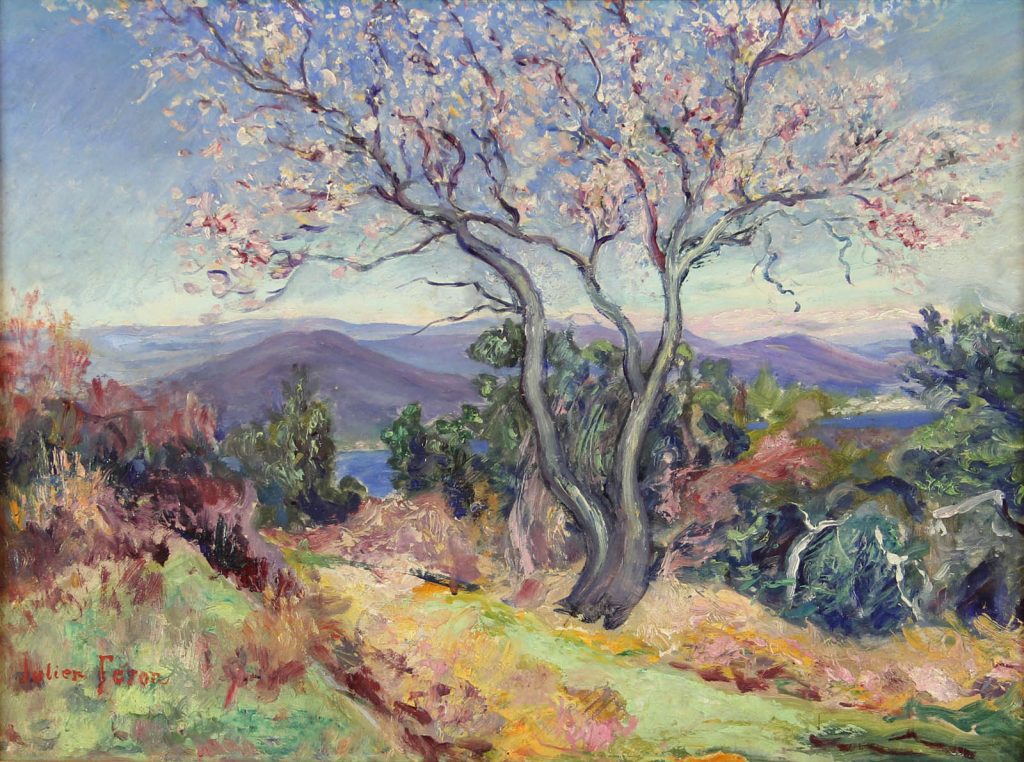
Unlike many artists, he was not drawn to the Provençal coast, but to the hinterland where nature flourished. A member of the Crozant school, this colorist is close to the Fauves; his treatment of space and skies is similar to that of the Impressionists. Sky, nature, colors: he was bound to love Gassin, nestled in the heart of the Maures massif, where he also painted notable architectural features, such as the church of Notre-Dame-de-l’Assomption.